
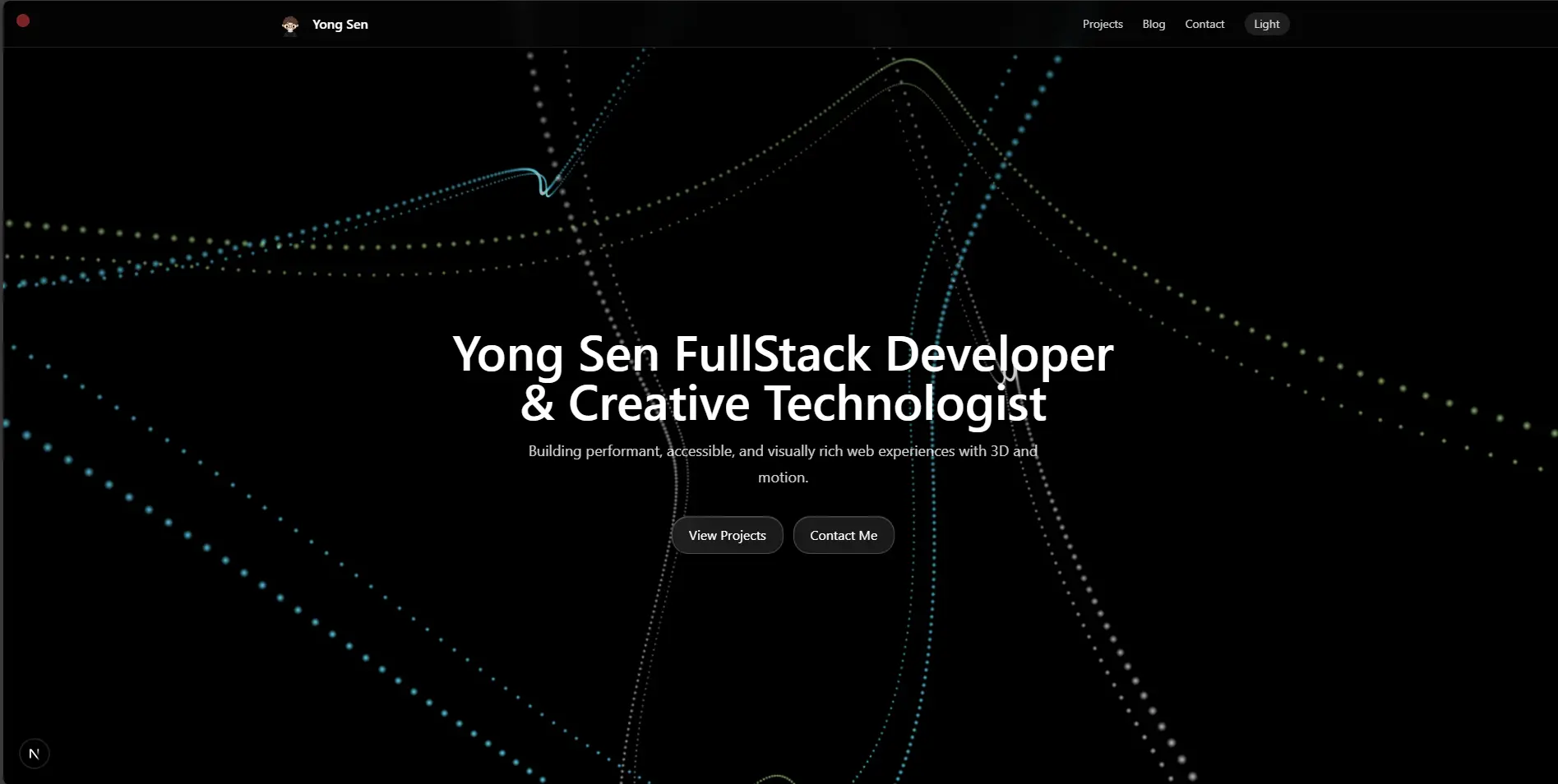
Portfolio System Redesign
A modern, performant portfolio built with Next.js 15, featuring liquid glass aesthetics, 3D interactions, and MDX-driven content management.
About This Project
A complete redesign of my personal portfolio showcasing modern web development practices, performance optimization, and cutting-edge UI/UX design patterns.
Project Overview
This portfolio represents a significant evolution in my approach to web development, focusing on three core principles: performance, accessibility, and expressive visuals. Built from the ground up with Next.js 15 and React 19, it demonstrates advanced techniques in modern web development.
Key Features
🎨 Liquid Glass Aesthetic
- Glass Morphism Design: Custom GlassCard components with dynamic spotlight effects
- Interactive Elements: Mouse-following spotlights and smooth hover animations
- Visual Hierarchy: Carefully crafted spacing and typography for optimal readability
⚡ Performance Optimization
- 60 FPS Target: Optimized animations and interactions for smooth performance
- Adaptive Quality: Dynamic quality adjustment based on device capabilities
- Image Optimization: Next.js Image component with priority loading for above-the-fold content
- Code Splitting: Automatic route-based code splitting for faster initial loads
🎯 3D Interactions
- Three.js Integration: Interactive 3D background with React Three Fiber
- Blob Cursor: Custom cursor implementation with GSAP animations
- Gooey Navigation: Animated navigation with liquid-like transitions
- Physics Simulations: Realistic particle systems and physics-based animations
📱 Responsive Design
- Mobile-First Approach: Optimized for all screen sizes and devices
- Touch Interactions: Gesture support for mobile and tablet users
- Accessibility: WCAG AA compliance with semantic HTML and ARIA labels
- Progressive Enhancement: Core functionality works without JavaScript
Technical Architecture
Frontend Stack
- Next.js 15: App Router with Server and Client Components
- React 19: Latest React features with concurrent rendering
- TypeScript: Full type safety across the entire application
- Tailwind CSS: Utility-first CSS with custom design system
3D & Animation
- Three.js: 3D graphics and WebGL rendering
- React Three Fiber: React renderer for Three.js
- Framer Motion: Declarative animations and gestures
- GSAP: High-performance animations for complex interactions
Content Management
- MDX: Markdown with JSX for rich content authoring
- Gray Matter: Frontmatter parsing for metadata
- Custom Parsing: Lightweight markdown parser without external dependencies
Development Tools
- ESLint: Code quality and consistency
- Prettier: Code formatting
- TypeScript: Static type checking
- Next.js Dev Tools: Built-in development and debugging tools
Design System
Color Palette
- Primary: Neutral grays with white accents
- Glass Effects: Semi-transparent whites with backdrop blur
- Spotlights: Dynamic white spotlights for interactive feedback
- Typography: High contrast text with proper hierarchy
Component Architecture
- GlassCard: Reusable glass morphism container with spotlight effects
- Navigation: Active state management with smooth scrolling
- Lightbox: Full-screen image viewing with keyboard navigation
- BlobCursor: Custom cursor with trail effects and animations
Performance Metrics
Core Web Vitals
- LCP: < 2.5s (Largest Contentful Paint)
- FID: < 100ms (First Input Delay)
- CLS: < 0.1 (Cumulative Layout Shift)
Optimization Techniques
- Image Optimization: WebP format with fallbacks
- Font Loading: Optimized font loading with preload hints
- Bundle Analysis: Regular bundle size monitoring and optimization
- Caching Strategy: Aggressive caching for static assets
Accessibility Features
WCAG AA Compliance
- Semantic HTML: Proper heading hierarchy and landmark elements
- Keyboard Navigation: Full keyboard accessibility for all interactive elements
- Screen Reader Support: ARIA labels and descriptions
- Color Contrast: High contrast ratios for all text elements
User Experience
- Reduced Motion: Respects user's motion preferences
- Focus Management: Clear focus indicators and logical tab order
- Error Handling: Graceful error states and fallbacks
- Loading States: Clear feedback during content loading
Development Process
Version Control
- Git Workflow: Feature branches with pull request reviews
- Commit Messages: Conventional commit format for clear history
- Code Reviews: Peer review process for quality assurance
Testing Strategy
- Type Safety: TypeScript for compile-time error checking
- Linting: ESLint rules for code quality and consistency
- Manual Testing: Cross-browser and device testing
- Performance Testing: Regular performance audits
Future Enhancements
Planned Features
- Blog System: Enhanced MDX-based blog with search and filtering
- Project Gallery: Interactive project showcase with filtering
- Contact Form: Integrated contact form with validation
- Analytics: Performance and user behavior tracking
Technical Improvements
- PWA Support: Progressive Web App capabilities
- Offline Support: Service worker implementation
- Internationalization: Multi-language support
- CMS Integration: Headless CMS for content management
Lessons Learned
Technical Insights
- Server vs Client Components: Strategic use of Next.js App Router patterns
- Performance Optimization: Balancing visual effects with performance
- Accessibility: Building inclusive experiences from the ground up
- Modern CSS: Leveraging CSS Grid, Flexbox, and custom properties
Design Philosophy
- Minimalism: Clean, focused design that doesn't distract from content
- Interactivity: Meaningful animations that enhance user experience
- Consistency: Unified design language across all components
- Accessibility: Inclusive design that works for everyone
This portfolio represents not just a showcase of my work, but a demonstration of modern web development best practices, performance optimization, and thoughtful user experience design.